AB
5.0Reviewed Mar 9, 2023
Great Course! Not hard to understand and very informative.

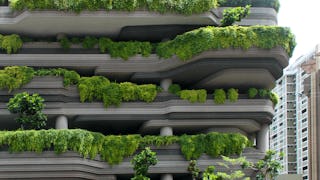
This course will include the evaluation of best practices in parking strategies for sustainable cities. Some of the examples include downtown parking policy, understanding the high cost of free parking, the development of parking sheds, managing neighborhood parking, hiding parking lots and other parking strategies and practices. There will also be a case study of the Victoria Canada parking management approach that investigates problems with current work on parking planning and discusses the cost of parking facilities and potential savings from improved management. There will also be an introduction to the use of form-based codes for application to sustainable cities. A variety of building forms such as mid-rise and high-rise buildings, apartment houses, live/work buildings, single-family homes, and row houses will be assessed. A particular emphasis will be on vacant property strategies for equitable and healthy communities. Vacant property strategies for reclamation will be evaluated with an analysis of the revitalization cycle. Green building construction principles will be evaluated in consideration for natural light and ventilation, solar orientation, use of sustainable building materials, energy efficient design and on-site energy generation as well as other considerations. Building architectural design will leverage climate, construction materials, and the culture and history of the area. Architecture choices should have a consistent appearance within the community and provide residential privacy. Other considerations include protection and preservation of historic buildings, use of universal design concepts, careful placement of civic buildings and the appropriate use of subsidized housing. By the end of this course, you will be able to: 1. Survey and evaluate a variety of parking policies that support sustainable cities and environmental quality. 2. Compare different parking options such as parking sheds, neighborhood parking, parking lot access, permeable parking spaces, and a variety of ways to hide parking lots. 3. Describe the approach that the state of Minnesota used in developing a greenhouse gas reduction plan for their transportation sector. 4. Examine issues of implementing climate – friendly transportation pricing and the concept of “fix it first” transportation policy. 5. Evaluate the concept of form-based codes and their benefits for creating sustainable cities. 6. Assess smart green construction practices such as use of sustainable building materials, on site energy generation, proper solar orientation, and the use of green building standards. Target Audience • Government Officials involved planning, designing, monitoring, enforcement, and assessment of sustainable project developments at the local, state, and federal level. • Private sector companies in the transportation and municipal design and construction business • Architects interested in advancing sustainable concepts for cities and communities • Foundations, associations, and other NGOs that support smart growth strategies • Academic faculty and students studying and researching community sustainability and resilience • Private citizens interested in improving their communities and living conditions
AB
Great Course! Not hard to understand and very informative.
SA
Very useful course . it was my first course i learned alot and it was not hard to learn
DW
It was a great overview of the basic ideas of sustainability in cities.
MS
This course helped me throughout my journey as an aspiring student of Architecture.
BP
In modern era this king of coarse is very useful to each and every person involved in Sustainable Development.Nicely covered useful topics and useful materials were provided.Thanks you sir
SR
The course provides lots of advanced information which is very eye-catching and I enjoyed it.
MB
it's a great experience fully informative, course material also optimum. I enjoyed throughout this course. Thank you
AS
A fully loaded course. I was impressed with the depth of material I took home after this course. Would recommend to any lover of sustainability.
NA
it was a really good and helpful course i just loved everything about it. thank you coursera
MA
this course is very informative useful and up to date.
FI
well all lelectures was very helpful and useful me. But no attraction in lectures and boring feel.
TO
its a very instructive course and i have amass alot of wealth of knowledge that would be good for my career.
Showing: 20 of 54
It's a very easy but clear course. I found very easy to follow even as a non-native english speaker. It was also super interesting even if it's more focused on the US method of building, in Europe some of those strategies are already in use but i guess it all depends on where and how you look at things. Btw Super approved!
In modern era this king of coarse is very useful to each and every person involved in Sustainable Development.
Nicely covered useful topics and useful materials were provided.
Thanks you sir
it was a great experience
The course is designed for beginners without prior knowledge of sustainable design and consists of short videos. However, those interested in the topic could find more comprehensive information online.
While the topic is interesting, I find the course material boring. The way the course is presented is not engaging.
Les transports durables, les bâtiments durables et la construction écologique sont des domaines interconnectés qui visent à réduire l'impact environnemental tout en améliorant la qualité de vie. Voici un aperçu de chacun de ces aspects et de leur importance dans le cadre de la transition vers des sociétés plus durables : 1. Transports Durables Les transports durables visent à réduire les émissions de gaz à effet de serre (GES) et la consommation d'énergie tout en favorisant des solutions plus écologiques et efficaces pour se déplacer. Cela inclut : Transports publics : L'augmentation des réseaux de transports en commun (trains, tramways, bus électriques) permet de réduire la dépendance aux véhicules individuels polluants. Mobilité active : Encourager la marche et le vélo en aménageant des infrastructures adaptées comme des pistes cyclables et des trottoirs. Véhicules électriques : L'adoption des véhicules électriques, hybrides ou à hydrogène, est essentielle pour réduire les émissions de CO2 du secteur des transports. Solutions partagées : Le covoiturage et les services de transport à la demande (type "car-sharing") sont des alternatives écologiques aux véhicules privés. 2. Bâtiments Durables Les bâtiments durables sont conçus pour réduire leur impact environnemental tout au long de leur cycle de vie, de la construction à la démolition. Les caractéristiques incluent : Efficacité énergétique : L'utilisation d'isolants de haute qualité, de fenêtres à double vitrage, et de systèmes de chauffage et de refroidissement à faible consommation énergétique. Énergies renouvelables : L'intégration de panneaux solaires, de turbines éoliennes ou de systèmes géothermiques pour fournir une partie de l'énergie nécessaire à l'édifice. Matériaux écologiques : Utilisation de matériaux recyclés, locaux et durables, comme le bois certifié ou le béton bas carbone. Design bioclimatique : Conception des bâtiments en fonction du climat local pour maximiser l'efficacité énergétique en utilisant des principes comme l'orientation du bâtiment, les auvents et les puits de lumière naturels. 3. Construction Écologique La construction écologique englobe un ensemble de pratiques qui visent à minimiser l'impact écologique de l'ensemble du processus de construction, du choix des matériaux à la gestion des déchets. Cela inclut : Minimisation des déchets : Réduction des déchets sur le chantier et réutilisation des matériaux. Des techniques comme la construction modulaire ou l'utilisation de matériaux recyclés jouent un rôle clé. Réduction de l’empreinte carbone : L'utilisation de matériaux à faible empreinte carbone (comme les briques de terre comprimée, ou le bois) et la réduction de l'énergie nécessaire à la fabrication des matériaux de construction. Récupération de l’eau de pluie : Intégrer des systèmes de collecte et de réutilisation de l'eau de pluie pour des usages comme l'irrigation ou les toilettes. Normes écologiques : Respect des normes internationales comme la certification LEED (Leadership in Energy and Environmental Design) ou la norme BREEAM (Building Research Establishment Environmental Assessment Method). Les Bénéfices Réduction des émissions de gaz à effet de serre : En privilégiant les énergies renouvelables et les matériaux à faible empreinte carbone, ces pratiques contribuent à lutter contre le réchauffement climatique. Économie d'énergie et d'eau : L'efficacité énergétique et la gestion responsable des ressources permettent de réduire les coûts à long terme pour les usagers et les entreprises. Amélioration de la qualité de vie : Les bâtiments durables offrent un meilleur confort thermique, une meilleure qualité de l'air intérieur, et une lumière naturelle accrue, ce qui contribue à la santé et au bien-être des occupants. Préservation de la biodiversité : Une conception respectueuse de l'environnement permet de préserver les espaces verts, d'intégrer la végétation en milieu urbain et de respecter les écosystèmes locaux. Conclusion Les transports durables, les bâtiments durables et la construction écologique sont des éléments clés de la transition vers des villes et sociétés plus respectueuses de l'environnement. Ces pratiques permettent de lutter contre les changements climatiques tout en favorisant des modes de vie plus sains et plus durables. Adopter ces solutions à grande échelle pourrait être une des réponses les plus efficaces pour un avenir plus vert et plus équitable.
The course structure is suitable for beginners and offers clear, understandable content. However, it could be improved by incorporating quizzes and mini-projects. While the lectures and readings provided a good theoretical understanding of the subject, hands-on practice through quizzes and mini-projects would not only reinforce the learning but also make the course more enjoyable. Practical exercises help learners apply what they've learned, fostering a deeper understanding and retention of the material.
Very good course. Indeed it helps me to understand sustainability in built environment holistically. However I still need to complete another 2 courses in this specialization course; Sustainable Neighbourhoods and Sustainable Transportation Networks and Streetscapes which are not included for free enrolment in the specialization. I wonder why?
Сourse not only delves deep into sustainable city planning, covering topics from parking strategies to green building principles, but also offers a rich learning experience!
Mimarlık ve şehir planlamasıyla ilgilenen bir lise öğrencisi olarak gayet net, kolay ve anlaşılır bir kurs olduğunu düşünüyorum. Ben beğendim.
Excellent course to learn more about sustainable cities in the context of transportation, buildings, and green constructions.
it's a great experience fully informative, course material also optimum.
I enjoyed throughout this course.
Thank you
this course helps me to learn about the sustainability,environmental changes and its effects on our surroundings.
its a very instructive course and i have amass alot of wealth of knowledge that would be good for my career.
The course provided excellent inpur with respect to transportation, urban design and sustainability.
it was a really good and helpful course i just loved everything about it. thank you coursera
Very useful course . it was my first course i learned alot and it was not hard to learn
This course helped me throughout my journey as an aspiring student of Architecture.
Its been an interesting course, easy to understand and the topics are so useful !!!
Great Course! Not hard to understand and very informative.